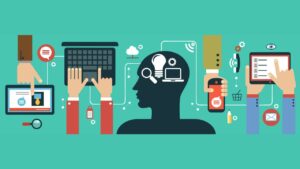
Artificial intelligence, often called AI, has become part of everyday life. You may have used it without realizing it when asking a voice assistant for directions, receiving movie recommendations on a streaming service, or using your phone’s camera to improve a photo. Because AI is mentioned so often in the news and online, many people assume it’s complicated or only relevant to technology experts. In reality, understanding the basics doesn’t require a technical background.
In my experience, the biggest challenge for beginners is that AI is often explained using technical terms. Once those terms are removed, the idea becomes much easier to understand. AI is simply a way of designing computer systems that can perform certain tasks that normally require human intelligence, such as recognizing patterns, understanding language, or making predictions based on data.
This article explains artificial intelligence in plain language, how it works, where you may already encounter it, its advantages and limitations, and how to use AI responsibly in daily life.
What Is Artificial Intelligence?
Artificial intelligence is a branch of computer science that focuses on creating systems capable of performing tasks that usually require human thinking.
These tasks may include:
- Recognizing speech
- Understanding written language
- Identifying objects in photos
- Translating languages
- Recommending products or videos
- Answering questions
- Detecting unusual activity in data
AI doesn’t think or feel the way people do. Instead, it processes information using rules, patterns, and mathematical models to produce useful results.
This approach usually works well because computers can analyze large amounts of information much faster than humans in many situations.
How Does Artificial Intelligence Work?
At a basic level, AI learns by analyzing data.
For example, imagine showing a computer thousands of pictures of cats and dogs. By examining patterns in those images, the system gradually becomes better at recognizing the differences between the two animals.
Many modern AI systems improve their performance by learning from large collections of examples rather than following a fixed list of instructions for every possible situation.
The quality of the results often depends on the quality and variety of the data used to build or train the system.
Artificial Intelligence vs. Traditional Computer Programs
Traditional computer programs follow specific instructions written by programmers.
For example:
- If the password is correct, allow access.
- If the printer is connected, print the document.
AI systems can handle tasks where exact rules are difficult to define.
For example:
- Identifying faces in photographs.
- Predicting traffic conditions.
- Understanding spoken questions.
- Suggesting music you might enjoy.
One mistake many beginners make is assuming AI replaces traditional software. In reality, many applications combine both approaches.
Where Do You Use AI Every Day?
Many people interact with AI without noticing it.
Common examples include:
- Voice assistants that answer spoken questions.
- Email services that filter spam.
- Navigation apps that estimate travel times.
- Streaming services that recommend movies or music.
- Smartphones that recognize faces for unlocking.
- Translation tools that convert one language into another.
- Online shopping websites that suggest products.
In my experience, once people understand these examples, they often realize AI is already part of their daily routine.
What Is Machine Learning?
Machine learning is one of the most common methods used to build AI systems.
Instead of programming every rule manually, developers provide the system with many examples.
The computer looks for patterns and gradually becomes better at completing similar tasks.
For example, a spam filter learns to recognize unwanted email by analyzing large numbers of legitimate and spam messages.
Machine learning is a part of artificial intelligence, but not all AI systems rely on machine learning.
Can AI Think Like a Human?
This is one of the most common questions beginners ask.
Current AI can perform impressive tasks, but it does not think, understand emotions, or possess human awareness.
It identifies patterns, processes information, and generates responses based on the data and methods used to create it.
Even when an AI produces natural-sounding text or realistic images, it doesn’t have personal opinions, beliefs, or experiences.
Understanding this difference helps set realistic expectations about what AI can and cannot do.
Benefits of Artificial Intelligence
AI offers many practical advantages when used appropriately.
Some common benefits include:
Saving Time
AI can automate repetitive tasks such as organizing emails, sorting photos, or summarizing information.
Improving Convenience
Voice assistants, smart search features, and navigation apps help people complete everyday tasks more efficiently.
Supporting Better Decisions
AI can identify patterns in large amounts of information, helping people analyze data more quickly.
Improving Accessibility
Speech recognition, live captions, and text-to-speech tools make technology easier to use for many people.
This approach usually works well because AI handles repetitive work while people focus on decisions that require judgment and creativity.
Limitations of Artificial Intelligence
Although AI is useful, it also has important limitations.
It Can Make Mistakes
AI-generated information may be incomplete, outdated, or incorrect.
Always verify important facts using reliable sources.
It Depends on Data
Poor-quality or incomplete data can affect the quality of AI results.
It Doesn’t Understand Like Humans
AI recognizes patterns but doesn’t truly understand situations the way people do.
Human Oversight Is Still Important
Important decisions involving health, legal matters, finance, or safety should not rely solely on AI-generated information.
In my experience, treating AI as a helpful assistant rather than a replacement for human judgment leads to better outcomes.
Common Myths About Artificial Intelligence
Several misconceptions can make AI seem more mysterious than it really is.
Myth: AI Knows Everything
AI can only generate responses based on the information and methods available to it. It doesn’t know every fact or have unlimited knowledge.
Myth: AI Will Replace Every Job
AI is changing how many jobs are performed, but in many workplaces it supports people by handling repetitive tasks rather than replacing every role.
Myth: AI Never Makes Mistakes
Like any technology, AI can produce incorrect or misleading results.
Myth: AI Is Only for Technology Experts
Many AI tools are designed for everyday users with no technical background.
How to Use AI Responsibly
AI is most helpful when combined with critical thinking.
Good habits include:
- Verify important information.
- Protect your personal data.
- Read privacy policies before sharing sensitive information.
- Review AI-generated work instead of assuming it’s always correct.
- Use AI to support learning rather than replace it.
A simple habit that often prevents problems is asking yourself whether you would trust the same information without checking another reliable source.
Will AI Become More Common?
Artificial intelligence continues to appear in more products and services.
Future developments may improve:
- Language translation.
- Accessibility tools.
- Customer support.
- Smart home devices.
- Education software.
- Transportation systems.
As AI becomes more common, basic AI literacy will help people make informed choices about how they use technology.
Common Beginner Mistakes When Learning About AI
Learning the basics is easier when you avoid a few common misunderstandings.
Expecting AI to Be Perfect
AI is a tool, not an infallible source of information.
Believing Everything AI Generates
Always verify important facts using trusted sources.
Sharing Sensitive Personal Information
Avoid entering confidential or private information into AI systems unless you understand how that information will be handled.
Assuming AI Understands Human Emotions
AI can recognize language patterns but does not experience emotions or consciousness.
Ignoring Privacy and Security
Use trusted AI services and review privacy settings when available.
Simple Ways to Learn More About AI
If you’re interested in learning more, start with practical experience.
Explore Everyday AI Features
Notice how AI appears in search engines, translation tools, photo organization, and voice assistants.
Learn One New Concept at a Time
Focus on understanding basic ideas before exploring more advanced topics.
Practice Critical Thinking
Compare AI-generated information with reliable sources to improve your understanding.
Stay Curious
Technology changes quickly, so learning gradually is often more effective than trying to understand everything at once.
Frequently Asked Questions
Is artificial intelligence the same as a robot?
No. AI is software that performs intelligent tasks. Robots are physical machines, and some robots use AI while others do not.
Do I need technical skills to use AI?
No. Many AI-powered tools are designed for beginners and can be used without programming knowledge.
Is AI always connected to the internet?
Not always. Some AI features work online, while others run directly on your device.
Can AI replace human creativity?
AI can assist with creative tasks, such as generating ideas or drafting content, but human creativity, judgment, and personal experience remain important.
Should I trust everything an AI tool tells me?
No. AI can make mistakes or provide outdated information. Verify important details using reliable sources, especially for decisions involving health, finances, legal matters, or safety.
Conclusion
Artificial intelligence may sound complex, but its basic idea is straightforward. It allows computers to perform certain tasks that normally require human intelligence, such as recognizing patterns, understanding language, and making predictions. AI is already part of everyday life, from navigation apps and spam filters to voice assistants and recommendation systems.
In my experience, the best way to understand AI is to see it as a practical tool rather than something mysterious. Learn the basics, use it thoughtfully, and remember that while AI can save time and support many tasks, human judgment is still essential. By building a solid understanding now, you’ll be better prepared to use AI confidently as it becomes an even more common part of everyday technology.